

Everything you Never Knew about Sports Bras!
A bra exists first and foremost to offer comfort and support to a woman’s breasts. It follows that when a woman undertakes rigorous activity, such as exercise, her breasts will experience more movement (and ever uncomfortable bounce), so as such will require a higher level of support. Enter the Sports bra.


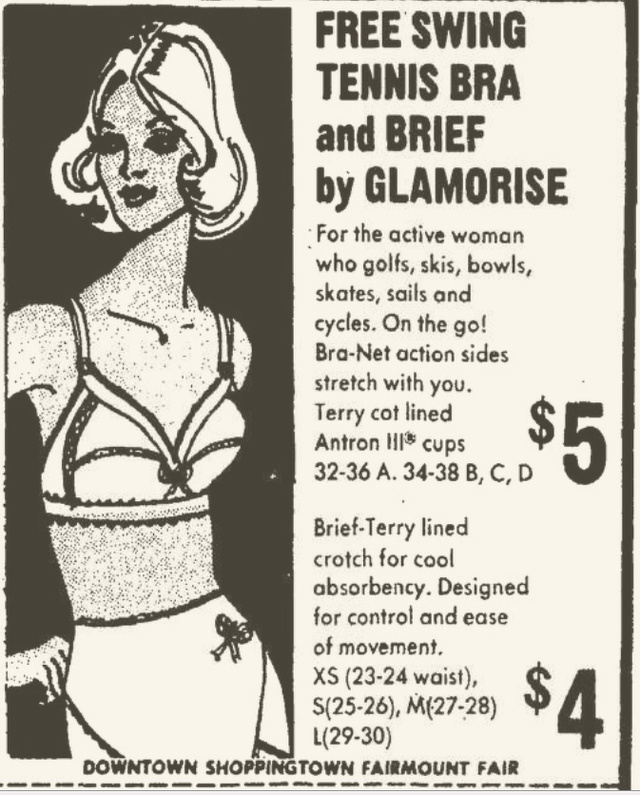
- The first commercially produced sporting bra was the “Free Swing Tennis Bra”, produced in 1975 by Glamourise Foundations. It was more supportive than a regular bra, yet still nowhere near adequate for its stated purpose. The straps were thin, it allowed for “free movement”, and really was suited only to women with very small cup sizes – hence very limited breast bounce.
- In 1977, US jogger Lisa Lindahl developed a sports bra based on a list of what a “jockstrap for women” would require. These factors included straps that would stay put and reduction in breast bounce. The prototype was none other than an actual jockstrap! It became the “jog bra”.
- Large breasted women were not catered to at all in the sports bra arena until as recently as the 1990’s – for some reason, large breasted women were believed to not participate in sports. This seems even more ridiculous when considering that sporting activity was expected of girls in high school and into adulthood.